
Fences That Stay Straight in Alabama Soil
Privacy Fencing in Clanton for residential properties needing secure boundaries in red clay soil conditions
Red clay soil across Chilton County expands when wet and contracts during dry periods, which creates seasonal movement that pulls improperly set fence posts out of alignment within two years. Privacy fencing installation in Clanton proper and Jemison residential areas requires post-setting technique that accounts for this soil behavior—posts must be set below the frost line with concrete footings that extend deep enough to anchor below the active expansion zone. A+ Home Improvements installs privacy fences across Central Alabama with hands-on knowledge of how local soil conditions affect long-term fence stability, which is the difference between a fence that stays plumb for decades and one that leans noticeably after the first wet season.
Privacy fence installation involves setting posts at proper depth with concrete that's mixed and poured to lock the post below the soil movement zone, then attaching horizontal rails and vertical pickets or panels that create a solid visual barrier. Post depth and concrete footing technique determine whether the fence remains structurally sound as Alabama's seasonal weather cycles cause the soil to shift.
Request a property consultation to review your lot boundaries, discuss material options, and determine what fencing approach fits your needs.
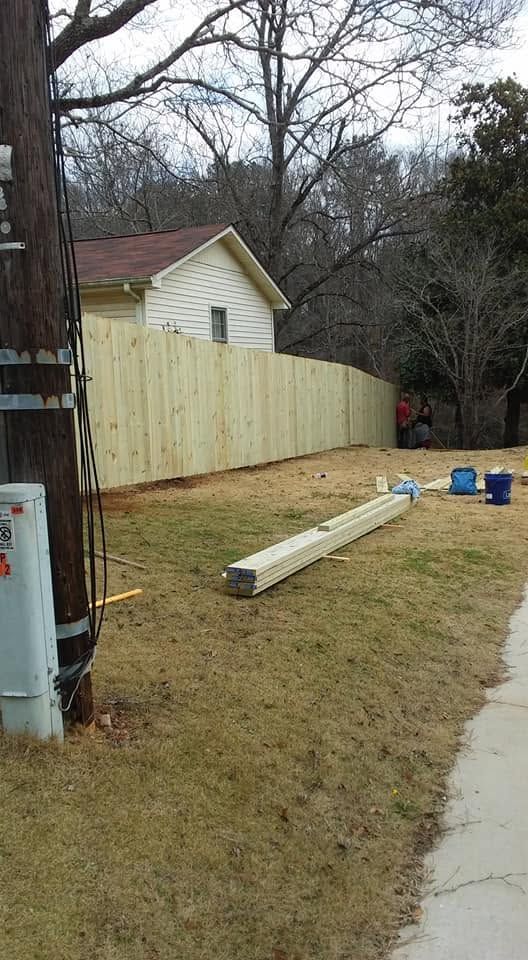
Why Post Depth Determines Fence Longevity
Fence posts must be set at least two and a half feet deep in Central Alabama's clay soil to anchor below the zone where seasonal moisture changes cause expansion and contraction, and concrete footings need to extend the full depth of the hole rather than just filling the top portion. When posts are set shallow or concrete doesn't fully surround the buried section, seasonal soil movement gradually works the post loose until the fence tilts and rail connections fail from the stress.
After installation completes, your property line will be clearly defined with a solid barrier that blocks sight lines and provides security for children and pets. The fence will remain vertical through Alabama's wet winters and dry summers without developing the progressive lean that characterizes DIY or cut-rate installations where post depth was minimized to save time. Wood fencing will need periodic staining or sealing to prevent moisture damage, while vinyl options remain maintenance-free but cost more upfront.
Fencing projects require attention to property surveys and permit requirements, and in some residential areas, homeowner association rules dictate fence height, style, or placement. Licensed contractors handle permit applications and ensure installations meet local code requirements for setbacks and height restrictions, which prevents issues when properties are sold or refinanced.
Questions Homeowners Ask About Privacy Fencing
Property owners planning fence installations in Chilton County typically want to understand material options and what installation involves in Alabama's soil conditions.
What fence materials perform best in Clanton's climate?
Pressure-treated wood resists rot in Alabama's humidity if properly sealed and maintained, while vinyl fencing eliminates maintenance requirements but costs more initially and can become brittle under prolonged UV exposure in areas without shade.
How deep do fence posts need to be in red clay soil?
Posts must extend at least thirty inches below ground in Chilton County's clay soil to anchor below the seasonal expansion zone, with concrete footings that fully surround the post rather than just capping the hole.
What happens if a fence isn't set deep enough in Alabama soil?
Seasonal soil movement gradually loosens shallow posts until the fence tilts, rail connections pull apart from stress, and the structure loses stability—a problem that typically appears within the first two years and requires complete reinstallation to correct.
How long does privacy fence installation take for a typical residential lot?
Most residential privacy fence projects in Central Alabama complete within two to five days depending on linear footage and terrain complexity, though longer runs or properties with significant elevation changes require additional time for proper grading and post alignment.
What determines whether a fence project needs a permit in Clanton?
Local ordinances typically require permits for fences over a certain height, and permit applications include property survey documentation to confirm the fence stays within legal setbacks from property lines and right-of-way areas.
A+ Home Improvements has built privacy fences across the Chilton County area for over thirty years with BBB A+ rating reflecting the long-term performance of installations in Alabama's challenging soil conditions. Schedule an estimate to review your property's fencing needs and discuss material options that fit your budget and maintenance preferences.