Outdoor Living That Stays Bug-Tight
Screened-In Porches in Clanton for homes near Lay Lake and Thorsby facing mosquito pressure
Screen frame tension and corner sealing determine whether a screened porch stays bug-tight through Alabama's humidity cycles, especially for homes around Lay Lake and Thorsby where outdoor living is a lifestyle priority but insects limit unprotected porch use. A+ Home Improvements builds screened enclosures for Alabama homeowners battling mosquito and bug pressure through spring and summer, using installation methods developed over 30 years of building outdoor structures in the region's climate. Frames are assembled with corner joints that resist gapping, and screen material is tensioned evenly to prevent sagging and maintain a seal at all edges.
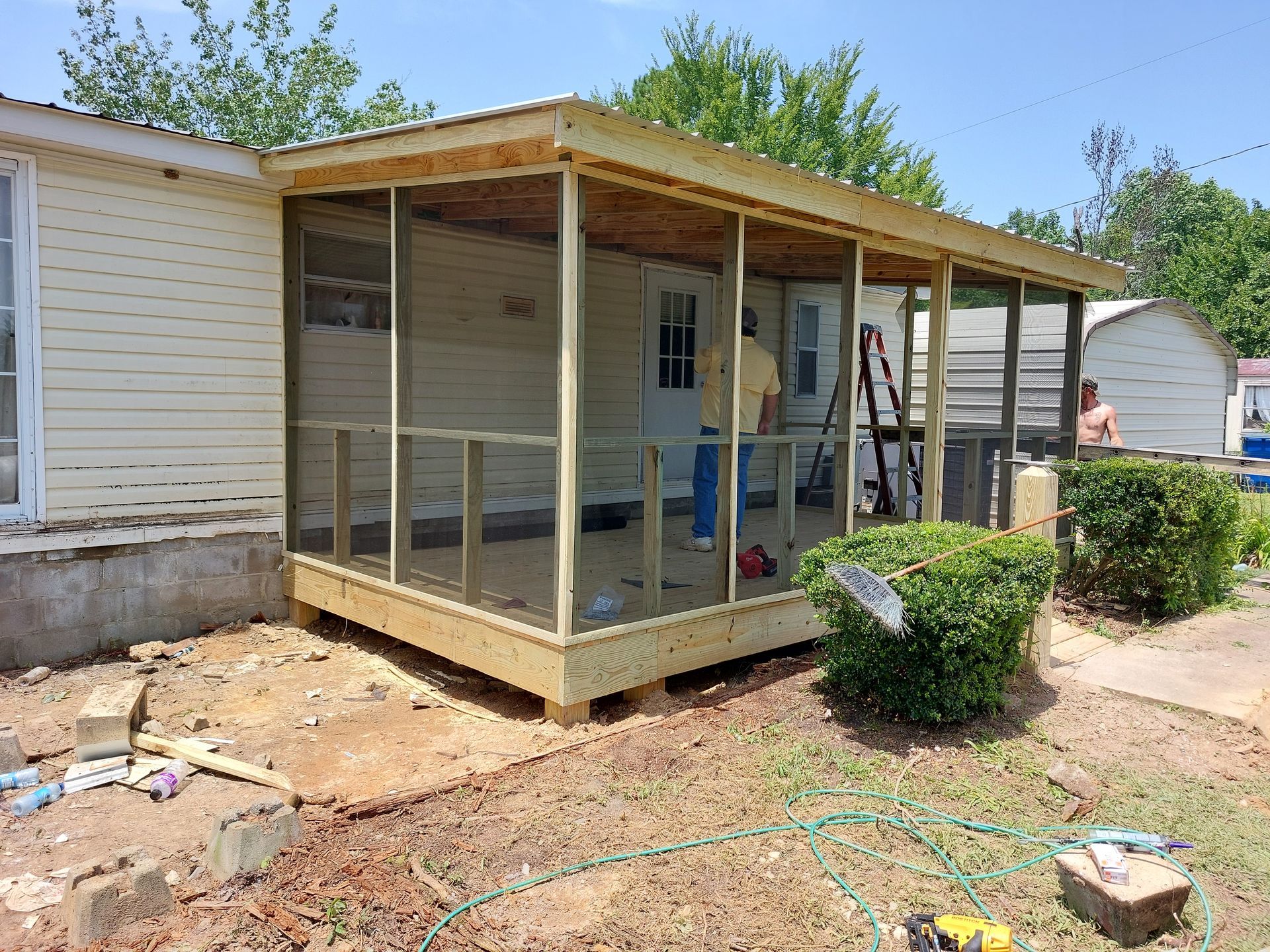
Construction involves framing the porch perimeter with vertical posts and horizontal rails, typically using pressure-treated lumber or aluminum depending on the desired finish and maintenance preferences. Screen panels are installed in sections with spline-secured edges that hold tension without pulling loose, and corners are sealed with overlapping material or pre-fabricated corner pieces to eliminate gaps where insects enter. The roof structure ties into the existing home roofline or is built as a standalone gable or shed roof depending on the porch layout.
Arrange a property evaluation to discuss porch dimensions, framing options, and whether your existing porch can be converted or if new construction is required.
What Changes After Screen Installation
Each screen section is stretched and secured with a spline tool that locks the material into a routed groove along the frame perimeter, creating uniform tension that prevents sagging over time. Aluminum frames resist corrosion and humidity-driven expansion better than wood, though treated wood frames are used when the porch design calls for a traditional appearance or painted finish. Door frames are installed with self-closing hinges and magnetic or spring-loaded latches to maintain the seal when the porch is in use.
Once construction is complete, you'll notice an outdoor space that remains usable during Alabama's worst bug seasons without constant swatting or spraying, furniture and decor that stays cleaner without pollen and debris blowing in, and evening use that extends later into the night without mosquito interference. The screened enclosure provides airflow and visibility while blocking the insect pressure that makes unprotected porches unusable from late spring through early fall.
Existing covered porches can often be converted to screened enclosures by adding framing and screen panels between existing posts and roof structures. New screened porch construction includes foundation work, framing, roofing, screen installation, and finish details such as trim, doors, and electrical outlets. Screen material options include standard fiberglass mesh and heavier-duty pet-resistant or solar-blocking fabrics depending on your priorities.
What Property Owners Usually Ask
Homeowners in Clanton and surrounding Chilton County areas frequently ask about materials, timelines, and whether existing porches can be enclosed before starting a screened porch project.
What screen material works best in Alabama's climate?
Standard fiberglass screen is the most common choice for insect protection and airflow, while heavier-duty materials such as aluminum or polyester mesh resist tearing from pet contact or wind-blown debris. Solar screen options reduce heat gain and glare but slightly limit visibility compared to traditional mesh.
Can an existing open porch be converted to a screened enclosure?
Yes, if the existing roof structure and support posts are in good condition and properly spaced, screen framing can be installed between them without rebuilding the entire porch. The crew evaluates the existing structure during the estimate to confirm whether conversion is feasible or if new construction is required.
How long does it take to build a screened porch?
Most projects are completed within one to three weeks depending on size, whether the porch is a conversion or new construction, and site conditions. Permitting and inspection requirements in Chilton County may add time before construction begins.
Does a screened porch require a permit?
Permitting requirements depend on the size and whether the porch is attached to the home or freestanding, and local building codes vary across Chilton County. A+ Home Improvements coordinates with local building departments when permits are needed and handles inspection scheduling.
How do screened porches hold up during Alabama's humidity and storm seasons?
Properly tensioned screen material and sealed corner joints resist humidity-driven expansion that causes sagging and gapping, and the frame is anchored to withstand wind loads during storms. Regular inspection of screen edges and door seals helps maintain bug-tight performance over time.
A+ Home Improvements has built outdoor living structures across Chilton County for over 30 years with licensed and bonded crews experienced in Alabama's climate demands. Call (205) 287-4286 to schedule a free estimate and review design options for your property.